Glasperlenspiel Music Festival 2027
Sun, July 11th at 7 pm
LA PAZZIA SENILE / THE CRAZY OLD FOOL
Helen Lokuta – (mezzo) soprano (Estonian National Opera), Triin Ella – alto (Estonian National Opera), Hortus Musicus, artistic director Andres Mustonen
Adriano Banchieri
 Main characters:
Pantalone – a foolish, aging Venetian merchant
Doralice – Pantalone’s young daughter who is deeply in love
Fulvio – a young man who loves Doralice
Lauretta – a dominant, cunning woman of questionable reputation
Dottore Graziano – a boastful, long-winded doctor from Bologna
Burattino – the servant
Synopsis:
Pantalone falls foolishly for the wily Lauretta. Hoping to thwart his daughter Doralice’s romance with the young man Fulvio, Pantalone schemes to marry Doralice off to the pompous, long-winded Dr. Graziano instead. The piece unfolds through musical scenes, dialogues, and comic intermezzi (featuring chimney sweeps and peddlers) where the old men display their absurd delusions and pretensions. The young lovers and witty servants navigate the older generation’s absurd interference. True to classic comedic form, the elders’ foolish plans fall apart, and young love ultimately triumphs in the end.
Introduction and prologue
L’Autore per introduttione
Intermedio di Solfanari
Prologo recitato dell’humor bizzaro
Act I
Ragionamento primo: Pantalone solo
Ragionamento secondo: Pantalone e Burattino
Ragionamento terzo: Fulvio solo
Ragionamento quarto: Gratiano e Pantalone
Intermedio secondo: Bando della Bertolina
Act II
Ragionamento primo: Pantalone e Burattino
Ragionamento secondo: Doralice sola
Ragionamento terzo: Gratiano, sonando e cantando
Ragionamento quarto: Pantalone e Loretta alla finestra
Intermedio terzo: di Spazzacamini
Act III
Ragionamento primo: Gratiano solo
Ragionamento secondo: Proposta di Fulvio alla sua amata Doralice
Ragionamento terzo: Risposta di Doralice a Fulvio suo amante
Ragionamento quarto: Pantalone solo
Licenza data dall’humor bizzaro
Balletto di villanelle
Between the movements of the madrigal comedy, dances by the following Renaissance composers will be performed: Giorgio Mainerio (ca 1535–1582), Aurelio Bonelli (1569–1620), Biagio Marini (1594–1663), and Gasparo Zanetti (1625–1645).
Banchieri. La pazza senile. Fragment. Hortus Musicus, 2 min 51 sek, mp3, 320 Kbps
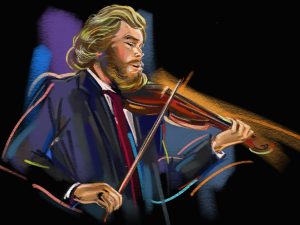
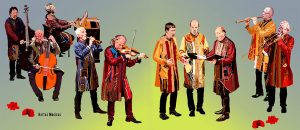
Hortus Musicus and Andres Mustonen need no introduction in Estonia, entire books could be written about both of them – and have been written. Here we will limit ourselves to a brief overview of Hortus’s and Andres’s connections with ERP and Glasperlenspiel.
The artistic director of the Glasperlenspiel Peeter Vähi has creative relations with Hortus Musicus and Andres Mustonen dating back four decades. Premieres, recordings for Erdenklang, Antes and Warner Finlandia, concert series… The current century also includes several new works, such as Ave…, Early Music of 3rd Millennium, Jerusalem, canto:), Messe de… Carmina Burana, Half a Century, Hommage à brillance de Lune, Bach. Scriptura sacra, Per annos, per sempre, Resurrection of Mozart and Nordic Legends. Close cooperation with MutonenFest should not be overlooked, and since 2012, Andres Mustonen has been the conductor and artistic director of the Glasperlenspiel Sinfonietta. There are more performances by Hortus Musicus and its members at the Glasperlenspiel than could be counted on fingers. In short, Glasperlenspiel, ERP, Hortus Musicus and Andres Mustonen form a kind of musical “family”, united by similar aesthetic aspirations and in many ways a similar worldview.
Organizers:
Peeter Vähi – artistic director
Tiina Jokinen – executive director
Kadri Kiis – producer, accountant
Mart Kivisild – design
Olavi Sööt – co-producer, video, logistics
Reno Hekkonens – marketing director, PR
Johannes Vähi – co-producer, webmaster, sound engineering, logistics
Rebeca Birk – social media
Special thanks: Tartu City Government, Urmas Klaas, Triin Käpp, Jana Raud, Ministry of Culture of Estonia, Cultural Endowment of Estonia, Heino Eller Music College, Kadri Leivategija, Tõnis Tamm, Canon and Overall, St John’s church, Kaupo Kiis, Kristel Leppik, volunteers